Showing posts with label p5. Show all posts

Tuesday, 19 April 2011

15 Minute Interval Shots

Steve asked me to use my tripod all the time from now on.  He also said try taking one shot then waiting 15 minutes before taking another one and only take 5, before moving on.  I decided to try this experiment in the garden because I thought it would be easier than being out somewhere and having to wait 15 minutes hanging around.  If I was in the garden I could grab a cup of tea in the interval times I thought...  As it happened,  I didn't bother with the tea until the last shot, because I used the time focusing and taking more time to decide on the composition, so I learned something with that.

These are the shots:
I was also to take two shots of each scene, one in focus and then move the tripod as I was releasing the shutter for the second shot.

1)
                                      shutter 1/12 aperture f22 iso 400 Focal L 93mm
                                                            
                                                                           Time 9.08


2)
                                    shutter 1/10 aperture f22 iso 400 Focal L 80mm

                                                                          Time 09.24


Now here I did have to take another as I realised I hadn't metered for the light correctly as I took the shot above, so I had to take  another:-

3)
                                    shutter 1/50 apertue f22 iso 400 Focal L 97mm

                                                                         Time 09.39

In some respects the image where I didn't meter for the light correctly is better because there is no shadow as there is here, in the foreground bush, and also the colours show better in front of that foreground bush in the incorrect one.  It was however over exposed in parts.


4)
                                     shutter 1/20 aperture f22 iso 200 Focal L 88mm

                                                                          Time 09.53

The images above and below are of the same scene but from a lower angle as I wanted to show the full shape of the foreground branches of a plant and bring in a little more colour to the scene with the bottom left foreground yellow (see below).  I noticed this bottom shot whilst I was waiting the 15 minutes after taking the above one... I was looking through the viewfinder and moving the angle of the camera on the tripod down when I saw this next shot quite quickly....so then I made the tea, to come back just before the last 15 minutes to check the composition again before releasing the shutter.

5)
                                    shutter 1/16 aperture f22 iso 200 Focal L 80mm

                                                                        Time 10.08

The 4 images above are quite comlex in composition and I have read that such shots are not always carried off,  but I wanted to have a go at some busy scenes to see how they turned out.

What I learned:

I took 5 images (and their doubles) in 1 hour 15 mins approx and from this exercise I found that I did study what was included and not included in the scene alot more than I would have normally.  I don't think any of the images are anything to shout about, in my opinion now, they do not show the study that went into them:-

  Ie. in image 1) deciding to centre the brightness of the sunlight highlighting  the flower plant,  leaving greenery to the top right and left and brown twigs to the bottom foreground sides, which would balance to the wood branch upper centre stem.

In image 2) deciding the have the flower plant going off to the side (right) with connecting branches coming in to join it from the right and then going from it off to the bottom right.  To show some red flower and left green leaves at the base of the scene to balance it to the centre red flower and same green leaves.

In image 3) deciding to include some stones to contrast to the flower plants and fill the frame with stones, greenery with splodges of red here and there.

In image 4)  deciding to show form of the thicker tree branches against the wooden fence and foreground thinner branches of a plant, with some colour (red) and greenery to balance with scene.  To show sun light reflecting on the leaves in the left of the scene.

In image 5) deciding to just lower that same scene, angle wise, to show the shape of the thinner branhes of the plant, with a little more colour being introduced to the bottom left.

I also learned that there is not that much difference between the clear shot and the moved one,  though I moved the tripod slightly as I released the shutter for each second shot, the movements are not that evident, maybe because a tripod was being used.

I learned that it is good to take more time over the set up,  you see more and there is opportunity closer than you think.

All in all I found it a worthwhile exercise.  I was glad the time lapse had been set to 15 minutes and not any longer, because it would take hours longer to achieve a minimum amount of images.

What I would do differently next time:

I would choose more interesting compositions overall and take from varying angles, as all these were taken seemingly from a similar side view to the subjects. (I did just carry the tripod to the next scene, keeping it much in the same height position, except for the lowering of it slightly for the last 2 shots).

I would increase the iso speeds for the latter 4 shots as they are too dark.

I would not choose such busy compositions within a small area.

I have returned to this blog to add this last comment (at the end of the course):-
   I would not have known at the time of doing this exercise how much it would benefit me... to take my time more for the set up of each composition (which was obviously Steve's intention when he gave me the exercise)....now I do see how my picture compositions improved.

Thursday, 7 April 2011

Impressionism - for theme 1

Impressionist art is a style where the artist captures an image of an object as if someone had just took a quick glimpse of it.  Painters like to capture mostly outdoor scenes, without detail but with more use of colours.  Therefore their pictures can be bright and vibrant.  I decided to look at this when Steve thought some of my research was leaning this way, ie the blur painting sort of look.

Here are some of the great impressionist artists of the past, with details of the subjects they loved to photograph:-

Edouard Manet influenced the development of impressionism - he loved to paint everyday objects.

Claude Monet - was interested in subtle changes in the atmosphere.

Camille Pissaro and Alfred Sisley - painted the French countryside and river scenes.

Peirre Auguste Renoir - loved to show the effect of sunlight on flowers and figures.

Edgar Degas - enjoyed painting ballet dancers and horse racing.

Berthe Morisot - painted women doing everyday things.

                                                                  Sunrise by Claude Monet

Monet displayed this famous painting at a Paris Art show leading a critic to label the whole show 'impressionist' because of its patchy texture.  This led to the name being given to  the movement.

I like the  pastel tones in the picture and the sun's reflection in similar sky colours.
To me it does display that dream quality, though not in the same blur way as I have previously looked at.  The focus point is on the people in the boat passing through, maybe on their way to work, as the background looks to be industrial.

I have  looked at some Renoir images too (see below)  because  I had heard of him and because  he loved the effect of sunlight on his subjects, which is what I am interested in.


                                                                           panting by Renoir


                                               shutter 1/100 aperture f4.0 iso 800 Focal L 82mm

I took this image of an entrance that was looking vibrant from the sunlight beyond.  I compare it to the above in way of colours  and because the the most active part of the scene is grouped to the right: sun light reflects on the branches in the right foreground brightly as  it does in the foreground right flowers of the painting.  Other bits of colour are introduced to his painting ( reds and blues) as are in my scene, but to a lesser amount. The tip left corner of my image shows a small section of blue sky as does the painting and then the predominate colours in both are shades of green. The form of people figures in the painting is replaced by the form of branches in my scene, and my drive path seems to be going in the same direction of that of an imagined path in the painting.

                                                                         painting by Renoir


                                                  shutter 1/32 aperture 7.1 iso 200 Focal L 105mm

I compare these images to the impressionistic look of the paintings above and below for their vibrance and similar colours. The pictures have a jolly yet relaxed feel to them just as in the paintings. I took both images at Calke grounds when I visited before using a Canon Eos 5D hand held.  I was pleased to get the birds in flight, though they were not clear, because I used a slow shutter and hand held the camera, though they do not need to be clear here to give an impression,  which is what I want.

                                            shutter 1/64 aperture f7.1 iso 200 Focal L 67mm

painting by Renoir

These images are very vibrant and have an overall calming feel to them.  In  Renoir's images the people look relaxed going about their hobbies.   Their presence is important and is the focus of each scene...that tells a story of where they have been, going or have arrived at.  I like the blend and mix of colours used, giving a bright and happy outlook,  giving the impression it is a sunny day with its reflections on the water, field and grasses.


shutter 1/12 aperture f7.1 iso 200 Focal L 70mm

There are no people in my images but they are relaxed and have some vibrance. Each of the Renoir's paintings here have gold colours in them and trees, so I compare my above images in the same way.

shutter 0.3 aperture f22 iso 320 Focal L 105mm


This two images are a bit impressionistic to me. The top one is blurry as the tree was blowing in the wind as I took the shot in the garden, I also moved the camera to the side slightly when releasing the shutter.  I think the lines are unusual and it  shows pattern and colour.
I like the bottom image for its bold colours and to me it looks like the two springs may be ornamentally hanging from a wall. Again the shot was taken in the garden with the Canon Eos 5D, hand held.


shutter 1/50 aperture f4.0 iso 200 Focal L 99mm

Wednesday, 6 April 2011

Practising the Dreamy

shutter 1/6 aperture f22 iso 200 focal L 82mm

Steve had suggested I try moving the camera slightly on slow shutter speeds and experiment with different shutter speeds so this is what I was attempting with these shots.

They do  look more dreamy to me.  Again I went out in the garden experimenting with a Canon Eos 5D camera, with 24-105mm Lens,  hand held on a windy day, so there was some movement in the branches/plants but I also moved the camera more as I took the shots.  I started to focus using a centre focussing meter then as I release the shutter I moved the camera up or down at varying degrees until I discovered that moving the camera to the right or left just a little way on release of the shutter proved better results.  I also used a slower shutter than  the last time I tried this exercise, and I think the results are better.  In the above image I like the cut off line with the blue and white sky running diagonally.  


shutter 1.0 aperture f22 iso 250 focal L 97mm

This one lacks lustre but it is all blurred, by moving the camera slightly to the right as I released the shutter.


                                                  shutter 1.0 aperture f22 iso 320 focal L 105mm

The above  looks more painting like I think: a ghost sweeping through the conifers.  I had moved the camera left and right as I released the shutter.

He had also suggested I take one clear shot and one blur one...  The second image below is where I tried moving the camera up and down:

                                        
                                               shutter 1/5 aperture f22 iso 320 focal L 105mm


On viewing,  I decided I preferred the effects of  moving the camera sideways.

Wednesday, 30 March 2011

Research - Linda Hackett for theme 1


taken by Linda Hackett

                                                            Taken by Linda Hackett

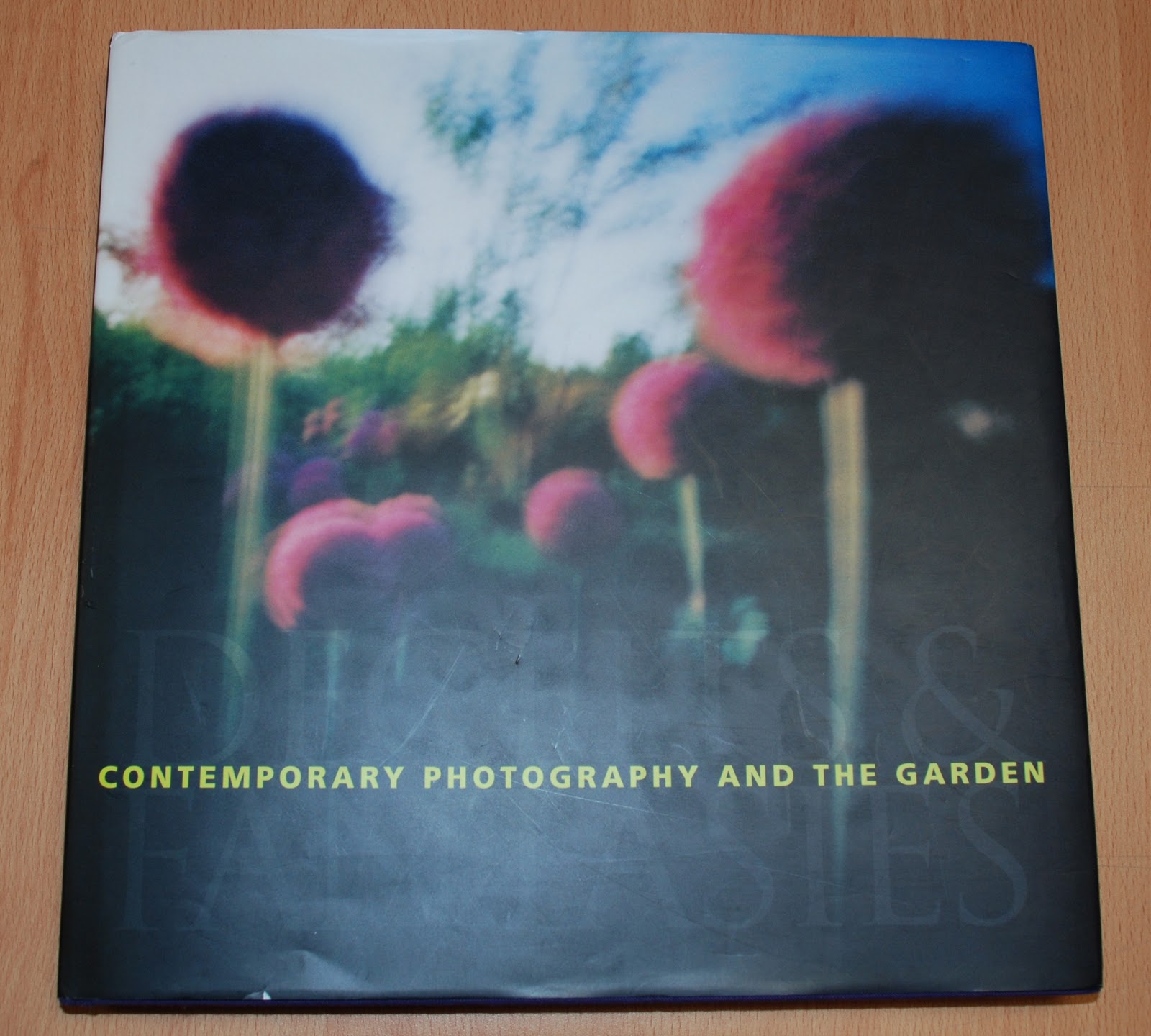
I was looking at a book in college class ( Contemporary Photography And The Garden) and noticed some images by Linda Hackett.  They were blurry which gave a soft look with a dreamy sort of mood. There is a sense of  happy spring time in the above and its very colourful. The blur makes your eye search out things in the scene.  I decided to experiment with some blur and some focus in search of the dreamy look....

Linda Hackett is an American who started photographing an abandoned estate garden near her home in Southampton, New York in the mid 1980's.  She exaggerates colour and plant forms in her hallucinatory type imagery where elements of light and air take on an almost phisical presence.
She uses a pin hole camera which encompases extended exposure times to record the effects of wind movement through the garden.  She often places the camera so close to the subject that it would be unrecognisable without the written descriptive.  Hackett works exclusively at dawn and dusk when longer exposure times are required and adopts a "plants eye" perspective of the garden.  Her pin hole camera distorts light to give a metamorphosis mix of the light and intense colours resulting in the production of a surrealist atmosphere.

I have taken the following shots  in the garden at dusk in the shade.  I don't think the above was taken in any direct sunlight.  Here I am experimenting  firstly on smaller objects, to try to achieve a dream like effect, before I go out and try the full scene shots.  However I do not have a pin hole camera so will try to achieve the best I can with what I have.

shutter 1/6  aperture f4.0  iso 200  focal L 99mm

These 2 images contain some sky as in Linda Hackett's but not the same lovely blue.  I have included them because I like the curves of the twigs, but they don't have the appeal overall of Linda Hacketts, they don't really work the same.  Also these are where I have focussed in  a lot closer to the subject whereas Linda's  shot more of a full scene.

                                                shutter 1/25 aperture f4.0  focal L 105mm

I used a slow shutter speed and wide aperture which helped with the blur effect to the background and zoomed in to capture some detail.

shutter 0.4  f4.0  iso 200  focal L 105mm

The above image is better where sky is not included, I think it makes for a better composition and is more colourful because of the contrasts of the flowers to the dark green background.  Whilst the flowers are bright, they do look abit over exposed in parts, and  this loses detail, which could be ok here as I did not want all the details to be apparent anyway.

None of these images are completely blurred like that of Linda Hackett's which I think is not so easy to pull off successfully.  The sun was fading when I took this shot,  and no light was on the scene at all but because it had been a bright day and was now dusk, light still caught the flowers (above image) making them look bright. The dark shadows of the conifers gave the dark background.

                                                  shutter 1/25 f4.0  iso 200  focal L 75mm

The image above is more of a scene where I zoomed out abit.  I like it in part because it is unusual.  I think it captures dreamy slightly but it has hardness with the softness, given by the form of the tree trunks. In Linda Hackett's image the darkness on the left gives some drama and I wonder if the darkness here on the right achieves that.  What I do like is the triangle view of the sprigs, and it does make me think about the image more than my close shots above, which is what Linda Hackett's did.

                                              shutter 1/6  aperture f4.0 iso 200 focal L 105mm

The above is my completely out of focus image but it is only slightly so it still does not achieve the right effect.  I gained this all over out of slight focus by moving slightly as I took the shot hand held.  It has no dreamy quality and it left me wishing it was actually in full focus because I liked the colours and composition. 
 Again it is using hard and soft materials together and I had seen images that did this by another photographer in that same book, which I will look at again during class. 

 I took all these shots hand held thinking that any slight normal blur, by movement, may help what I trying to achieve.  If I was to attempt such shots again I could use a tripod and try tapping it as I released the shutter, but overall I think I need to use a slower shutter speed and move the camera around more.  I had had my camera set on a single centre focus point thinking this would also help make less of the scene in focus, but then I did focus with this centre point, in all but the last image, so this would not be the answer to achieve an overall blurry image either.


Other images I took:-
These images show some blur and some clarity in each just as my above ones do, hence still not achieving that overall blur look that looks correct.  However I do hope to capture the effect I am effect with digital manipulation later on:

                                                 shutter 4.0 aperture f4.0 iso 200 Focal L 105mm


shutter 1/8 aperture f4.0 iso 200 Focal L 75mm


                                             shutter 1/12 aperture f4.0 iso 200 Focal L 75mm


This is the cover of the book I have taken inspiration from in college class, Contemporary Photography And The Garden, Deceipts & Fantasies... where a group of artists in the mid 1980's turned to gardens as a subject for their photography.  It holds a wide range of artistic images whereby gardens are reflected upon as  sites of lyrical beauty and luxurient atmosphere to show them in a dark visual metaphor for the manipulation of nature.

Wednesday, 23 March 2011

I stood in a tree

I do have a thing for trees and love to photograph them.  During Level 1 I researched Thomas Packenham, and his book  "Remarkable Trees Of The World."  I remember reading about  "the tree that looks like a troll" and how it had an opening base and looked like you could step inside.  I remember saying I have never walked inside a tree before......and now I have...

                                          shutter 1/160  aperture f7.1  iso 200  focal L 24mm

This is the tree I stepped inside of.  I exposed for the base of the tree in the above shot which has come out clear with the lone branch in the foreground also showing clearly.  I like the ragertiness of this scene with branches everywhere, and the colourings. It also has some depth.

                                                                          Out Of Africa
                                                shutter 1/400  aperture f7.1  iso 200  focal L 60mm

The same tree taken from a different angle gives the scene a different overall colour and mood.

                                       shutter 1/12  aperture f7.1  iso 400   focal L 24mm

The above image is taken inside the tree looking up.   I had to have a higher iso as it was dark inside the tree except where sun light poured in through various openings.

                                            shutter 1/5  aperture f7.1  iso 200  focal L 47mm

These images  show where I stood inside the tree, taken from the outside peering in.  They reveal the colours and textures found inside.

                                                                        Tree legs
                                         shutter 1/40  aperture f7.1  iso 200  focal L 24mm

                                           shutter 1/6  aperture f7.1  iso 200  focal L 24mm

As I said my influences for these images was born during level 1.  Also I am now reading "The Life And Love of Trees by Lewis Blackwell..."a collective work of many great photographers, writers and thinkers who have been inspired by observing trees."

A quote from therein:-

                               "Except during the nine months before he draws his first breath,
                                            no man manages his affairs as well as a tree does"

My planning for this trip out was that I would go to Calke (a favourite place to photograph and walk) and find a new walk.  I would carry my camera hand held because I believe this can lead to more creative shots, and look for close ups of nature that catch my eye.

Tuesday, 22 March 2011

Tree story

I prepared before going out by making sure my battery was fully charged.  I took my kit and started out to Calke grounds with the intention of taking some shots of trees for  theme 1 and some close ups for theme 2 within the same journey.  Once there I parked up and chose a walk route.  I carried my camera hand held, leaving my tripod in the boot in case I wanted to return to collect it.
In these images I have concentrated on form, pattern, colour, texture and perspective.

                                         shutter 1/640  aperture f.4  iso 200   focal L 50.0mm

I have used the rule of thirds in most of these images.
                          
                                        shutter 1/328   aperture f.4   iso 200   focal L 50mm

                                        shutter 1/1000  aperture f4  iso 200 focal L 24mm

These images show pattern, form and colour.

                                          shutter 1/1328  aperture f4  iso 200  focal L 24mm

                                                 shutter 1/1000  f4  iso 200  focal L 24mm

Tree Story depicts  different angled shots of the same monster of a tree showing off its shadow patterns and perspective that appears to look like its branches reach out to meet  the trees in the background behind the fence, when in fact there was quite a lot of space between them.  The above image looks like the branch is suspended in mid air, it is a close up of the image above, which is a part of the image above that...

                                                                        Sunny Side
                                         shutter 1/1600   aperture f4  iso 200  focal L 24mm

Sunny Side shows the tree from the other side showing which way the  sun light  is coming from  providing the hard shadows and more of  a siluette appearance. The image shows pattern and form.

                                                                           Arms                    
                                           shutter 1/1000  aperture f4   iso 200  focal L 28mm

Arms shows form whereby  tree arms and shadows form  together to create  a jigsaw look over the whole scene, showing pattern and form.

                                                                       Down Below
                                          shutter 1/250  aperture f4  iso 200  focal L 35mm
The above image shows texure and form.                          

                                                                          Up above
                                               shutter 1/1000  aperture f4  iso 200  focal L 35mm
The above image shows pattern, form and texture.


                                                                           Platelets
                                       shutter 1/500  aperture f4  iso  200  focal L 105mm

A close up shot shows the barks flaky peices... a hard form left contrasting to the delicate leafy twigs of the right and blue light touches coming through from the background. The image shows form and texture.